Data-Processing Agreements under U.S. state privacy laws
By Yourlegalassistant Team
SUMMARY
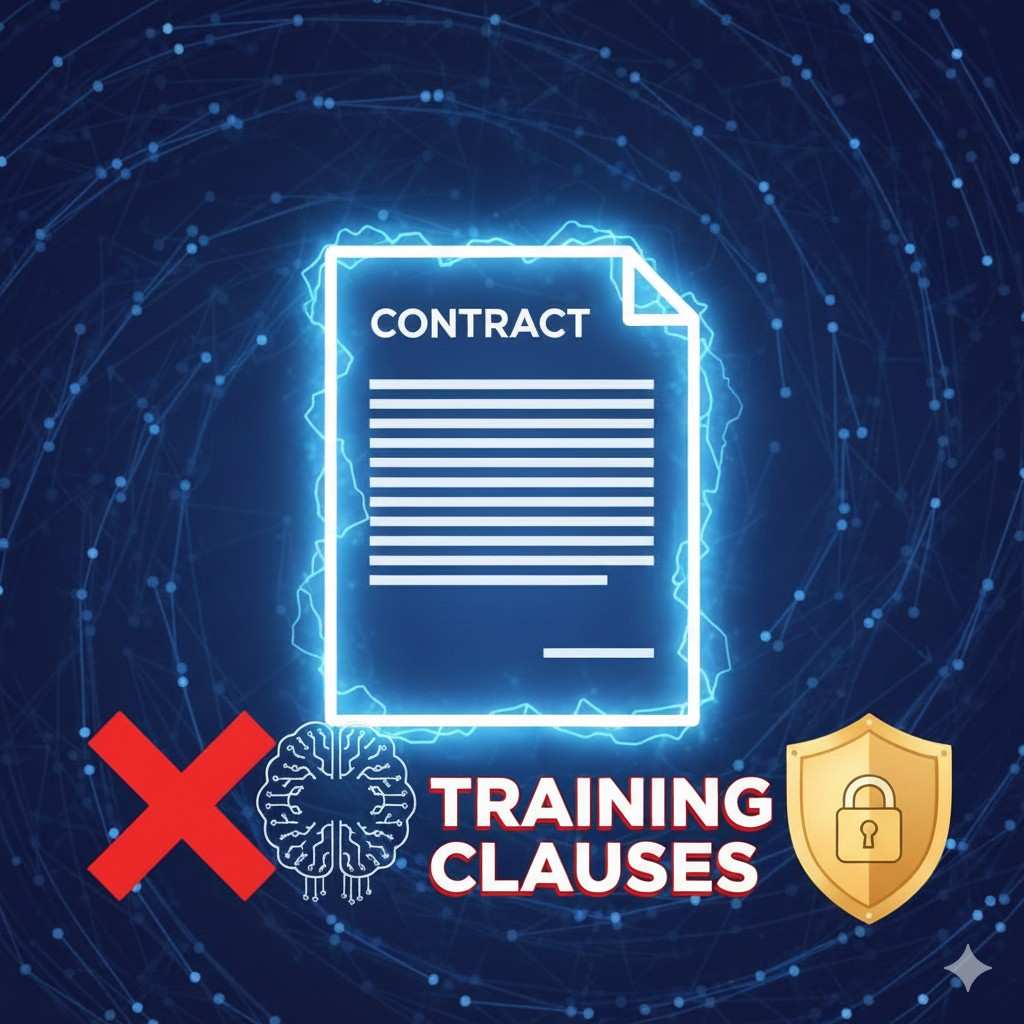
As artificial intelligence becomes deeply embedded in business operations across the U.S., companies are increasingly concerned about how their data is being used, especially when shared with vendors, SaaS providers, or third-party platforms. To safeguard trade secrets, personal information, and competitive insights, organizations are now adopting No-AI-Training clauses in their contracts. These provisions prevent service providers from using customer data to train or improve AI models without permission. This blog explores why these clauses have become essential in 2025, how they work, the legal cases shaping their rise, and what companies must include when drafting or negotiating them.
INTRODUCTION:
With the emerging of AI in 2025, businesses and companies across the U.S. are confronting a new legal challenge, protecting proprietary data from being used to train third party AI models. This concern has given a rise to new category of contract provisions i.e. “No-AI Training Clause” which expressly prohibits vendors, partners and service providers from using customer data to train and enhance AI systems.
These clauses are now added in many agreements including SaaS agreements, cloud service contracts, licensing agreements, procurement documentation and Non-Disclosure Agreement (NDA). The purpose of including No-AI Training clause are to preserve confidentiality, maintain competitive advantage, prevent regulatory breaches and ensure data stays with the companies.
This blog explains how these clauses work, why they are rapidly becoming standard in 2025, and what companies must watch out for when drafting or negotiating them.
WHAT IS NO-AI TRAINING CLAUSE:
A No AI Training Clause is a contractual provision that explicitly prohibits the use of specified data, content, or services for the purpose of training, developing or enhancing artificial intelligence or machine learning models.
These clauses are a direct response to concerns from creators and businesses about their intellectual property and confidential data being used without permission or compensation to build AI systems that might eventually compete with their own offerings.
WHY NO-AI TRAINING CLAUSES ARE BECOMING STANDARD IN 2025
1. To Prevent Unauthorized Use of Proprietary or Confidential Data
AI Systems uses and learns from the data they receive. Without such clauses, vendors could intentionally or inadvertently use the customer data to:
· Train large language models
· Generate new product features
· Improve algorithms
· Build predictive analytics tools
For Businesses the risks include:
· Trade Secret Exposure
· Leakage of sensitive commercial strategies
· Loss of competitive edge
· Privacy violations involving personal data
· Inadvertent disclosure through AI outputs
Prohibiting such AI training ensures the company retains full control over how its data is processed
2. Compliance with U.S. Privacy Regulations
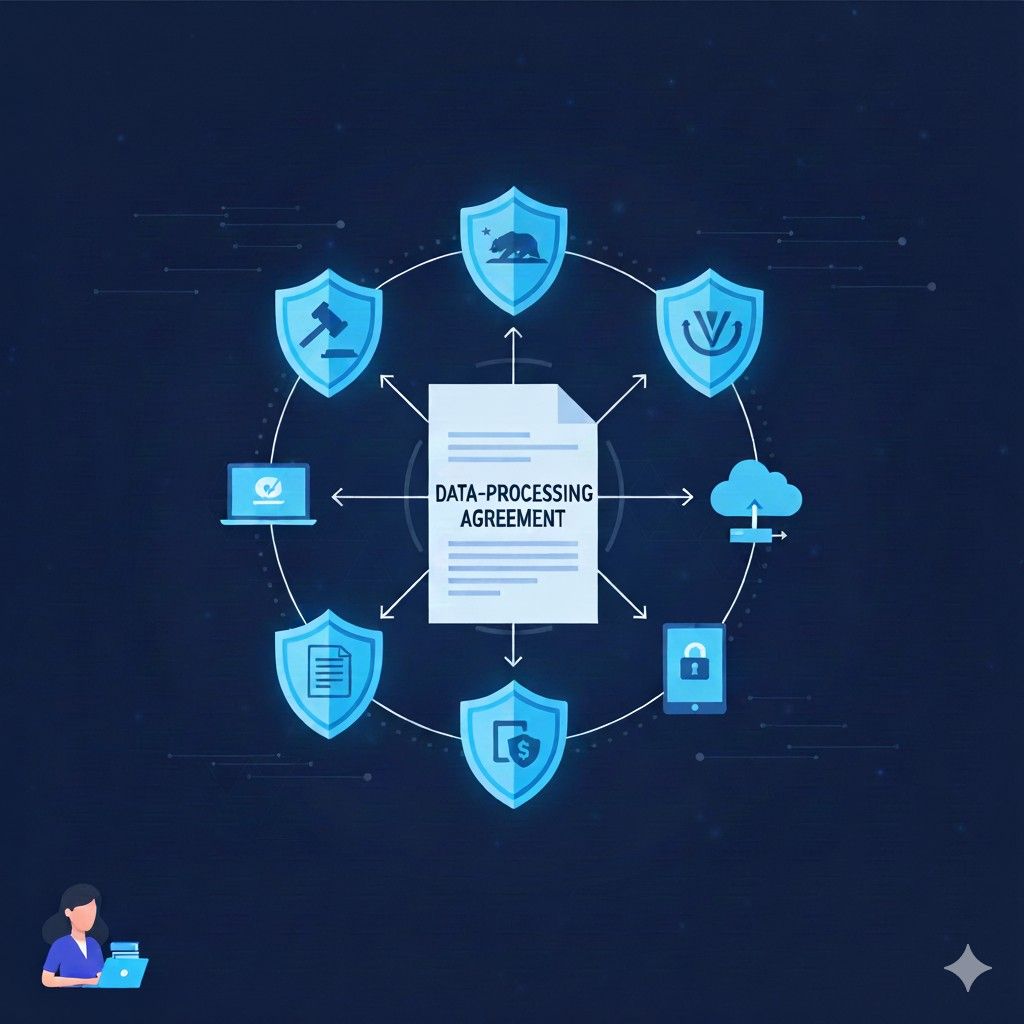
Several U.S. regulatory frameworks impose strict duties on data controllers and processors, including:
· California Consumer Privacy Act (CCPA) and CPRA amendments
· Virginia Consumer Data Protection Act (VCDPA)
· Federal Trade Commission (FTC) data privacy & deception guidelines
Under these laws, using personal data for AI Training without any proper consent may be considered as unauthorized processing. Therefore, companies are including No-AI Training Clause to demonstrate compliance and reduce enforcement risks.
3. Contractual Transparency with Technology Vendors
As generative AI capabilities expand, vendors now often include broad license rights in their Terms of Service. Many enterprise customers negotiate these down using No-AI-Training clauses to narrow how their data may be accessed, stored, or re-used.
CASE LAWS SUPPORTING NO-AI TRAINING CLAUSE
Thomson Reuters V. Ross Intelligence, Inc (D. Del. Feb. 11 2025)
A federal court held that using proprietary legal headnotes to train an AI model infringed on copyrighted material and rejected the defendant’s fair use defense as a matter of law.
This decision is one of the earliest binding rulings directly implicating unauthorized AI training data use in a commercial context, and therefore strengthens a company’s leverage to contractually prohibit such training without permission.
LinkedIn (Microsoft) Privacy Lawsuit on AI Training (2025)
In early 2025, a proposed class action lawsuit was filed in the Northern District of California against LinkedIn (a Microsoft subsidiary), alleging that the platform improperly disclosed private InMail messages for AI model training without valid consent. Plaintiffs assert claims for breach of contract, unfair competition, and violations of the Stored Communications Act.
WHAT DOES A STRONG NO-AI TRAINING CLAUSE INCLUDE?
1. Explicit Prohibition:
The agreement therefore uses a clause mentioning that vendor shall not use, access or process Customer Data for the purpose of training, fine-tuning, or improving any machine learning models, including generative AI Systems, except as permitted otherwise in any other clause.
2. Restriction on Data Mining or Derivative Models
The No-AI Clause bans on creating derivative datasets, ban on algorithmic improvement using computer inputs and ban on storing customer data in training repositories.
3. Mandatory Deletion Protocols
Vendors must delete data after service use and certify destruction so that AI cannot store the data and vendors can use for training AI systems.
4. Remedies for breach
Breach is often treated as material breach, Privacy Violation and misappropriation of trade secrets
5. Carve-outs for permitted use
Companies may allow limited AI use such as automated security monitoring, performance analytics, non-identifiable statistical aggregation but only with the explicit written consent so that no one can misuse the Artificial Intelligence.
CONCLUSION:
No-AI-Training clauses are becoming a critical safeguard for U.S. businesses navigating the rapidly evolving world of artificial intelligence. As data grows more valuable, and AI becomes more embedded in commercial services, companies must ensure that the data they share is never used in ways that jeopardize privacy, intellectual property, or competitive advantage.
Properly drafted clauses create clarity, enhance compliance, and give companies confidence that their information will never be used to train external AI systems without explicit permission.
FREQUENTLY AKSED QUESTIONS
1. What is a No-AI-Training clause?
It is a contract provision that prohibits a vendor or platform from using your data to train or improve AI or machine-learning models.
2. Why are companies adding No-AI-Training clauses?
To protect confidential information, prevent unauthorized data use, and comply with privacy laws like CCPA and CPRA.
3. Does U.S. law allow companies to restrict AI training?
Yes. Through contracts, IP rights, trade secret law, and privacy rules, companies can legally restrict how their data is used.
4. Can a vendor still use my data for analytics?
Only if the contract allows it. Many No-AI-Training clauses still permit anonymized analytics, but only with explicit consent.
5. Do these clauses stop all AI usage?
No. They only block AI training on your data. Companies can still use AI tools for security, automation, or performance improvement if agreed.
6. What happens if a vendor violates a No-AI-Training clause?
It can be treated as a material breach, leading to termination, damages, or trade secret and privacy claims.
ABOUT THE AUTHOR:
Shreya Verma is a corporate lawyer and legal content strategist with expertise in corporate law, contract drafting, and regulatory compliance. She has extensive experience drafting commercial agreements and advising startups. Through YLA, she simplifies complex legal concepts to help businesses make informed, compliant, and growth-oriented decisions.
DISCLAIMER:
The information provided in this article is for general educational purposes and does not constitute a legal advice. Readers are encouraged to seek professional counsel before acting on any information herein. YLA and the author disclaim any liability arising from reliance on this content.

Related Articles

Leave a Comment