EMBEDDING ESG & SUSTAINABILITY CLAUSES IN U.S. SUPPLIER / PARTNER AGREEMENTS — WHAT’S CHANGING IN 2025
By Yourlegalassistant Team
INTRODUCTION:
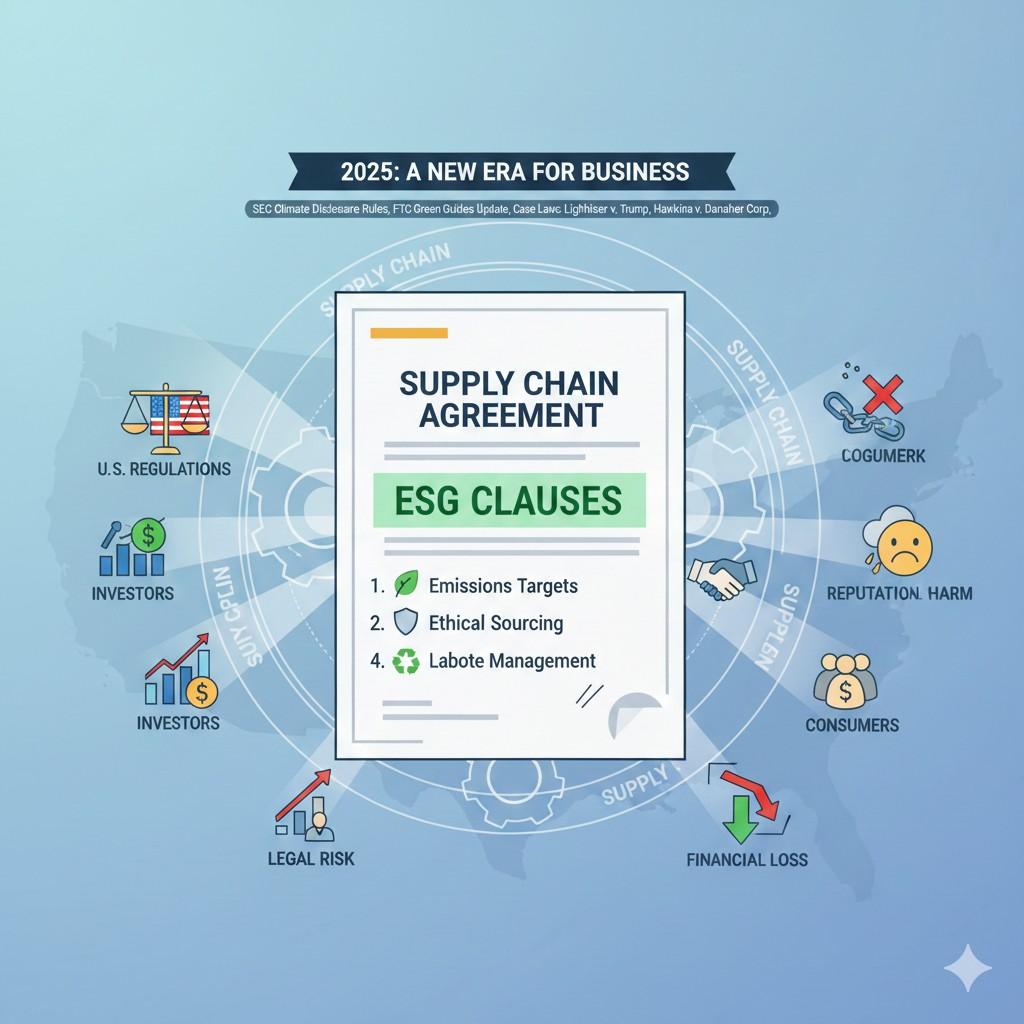
Environmental, Social and Governance (ESG) responsibility is no longer an optional branding exercise for the U.S. Companies but are shaping day-to-day commercial relationships especially supply chain contracts in 2025. Businesses are now embedding ESG and sustainability clauses into supplier, distributor, and partner agreements to ensure environmental compliance, ethical sourcing, labor protections, emissions reporting, and regulatory transparency.
This shift is driven by evolving U.S. regulations, investor pressure, and global standards that require companies to demonstrate responsible supply chain practices. As a result, ESG terms that were once limited to CSR policies or sustainability reports are now becoming legally enforceable obligations in routine commercial contracts.
Companies are increasingly incorporating sustainability clauses into contracts to formalize ESG commitments and address pressure from regulators, investors, and consumers. These clauses help manage legal and reputational risks, build stakeholder trust, and enhance business resilience. Integrating ESG into contracts is a strategic necessity for long-term success, providing a competitive edge and mitigating potential legal and financial consequences.
This blog explains the changes in 2025, how ESG clauses are being drafted and what businesses must be aware of.
WHAT ARE ESG CLAUSES?
ESG clauses are contractual provisions that require suppliers and partners to meet specific sustainability, ethical, environmental and governance standards. They convert ‘voluntary ESG goals’ into legally binding obligations.
What is included in ESG Clauses are:
· Emission reduction targets
· Responsible sourcing requirements
· Anti-slavery and anti-trafficking compliance
· Waste management and recycling obligations
• ESG Integration in Contracts: Companies are increasingly incorporating sustainability clauses into contracts to formalize ESG commitments and address pressure from regulators, investors, and consumers.
• Benefits of Sustainability Clauses: These clauses help manage legal and reputational risks, build stakeholder trust, and enhance business resilience.
• Strategic Importance of ESG: Integrating ESG into contracts is a strategic necessity for long-term success, providing a competitive edge and mitigating potential legal and financial consequences.
ESG CLAUSES GROWTH IN U.S. CONTRACTS (2024–2025)
a. SEC Climate Disclosure Rules (U.S.)
The U.S. Securities and Exchange Commission introduced climate-related disclosure requirements for public companies in 2024–25. These rules require companies to track and report:
· Climate risks
· Emission data
· Supply-chain environmental impact
Public companies are inserting ESG requirements into supplier contracts to obtain the data needed for compliance.
b. FTC’s Green Guides Revision (2024 Update)
The Federal Trade Commission updated its Green Guides governing environmental marketing claims. Businesses now risk penalties for:
· Unsupported ‘eco-friendly’ claims
· Misleading carbon neutrality statements
· Vague sustainability advertising
To prevent greenwashing claims, companies are embedding strict ESG compliance warranties into contracts with suppliers.
RELEVANT CASE LAWS SUPPORTING ESG ENFORCEMENT:
Lighthiser v. Trump (D. Mont., 2025)
A 2025 federal case where youth plaintiffs challenged U.S. government actions promoting fossil fuel development. While the case was dismissed for jurisdictional reasons, the court acknowledged the growing legal significance of climate impacts.
Relevance: Shows courts are increasingly engaging with environmental accountability, reinforcing why companies must adopt clear, measurable ESG commitments in supplier contracts.
Hawkins v. Danaher Corp. (D.D.C., 2025)
This 2025 case involved allegations tied to product quality and supply chain misrepresentations. It highlighted how inaccurate disclosures or failure to meet stated standards can create legal exposure.
Relevance: Demonstrates that suppliers’ ESG-related claims (e.g., responsible sourcing, compliance reporting) can trigger disputes if not contractually supported and verifiable.
HOW ESG CLAUSES ARE BEING EMBEDDED INTO SUPPLIER AND PARTNER AGREEMENTS:
1. Environmental Responsibility Clauses:
Companies are drafting terms that requires suppliers to, reduce carbon emissions, comply with environmental regulations, use sustainable materials, provide emissions data or lifecycle reporting and meet recyclability standards.
Thus, many contracts now include mandatory audits, reporting obligations, and right to terminate provisions for environmental non-compliance.
2. Social Responsibility & Labor Standards Clause:
Social ESG clauses address ethical labor practices and worker protections. Suppliers must comply with laws on wages, working hours, and workplace safety, and must prohibit forced labor, child labor, or discriminatory practices. Some agreements also require training programs, diversity commitments, and grievance mechanisms. These clauses help build a responsible and ethical supply chain.
3. Governance and Ethical Conduct Clauses:
Governance clauses reinforce transparency and accountability. Suppliers are required to maintain anti-bribery systems, ensure accurate recordkeeping, and provide truthful ESG disclosures. Contracts often include whistleblower protections, reporting duties, and cooperation during compliance reviews. These governance terms reduce the risk of fraud, corruption, or misrepresentation.
BEST PRACTICES FOR EMBEDDING ESG CLAUSES IN 2025
- Define clear KPIs (carbon intensity, energy efficiency, waste reduction, safety metrics)
- Require third-party verification of sustainability claims
- Include audit rights & remediation periods
- Align clauses with recognized frameworks:
- GRI (Global Reporting Initiative)
- SASB Standards
- UN Guiding Principles on Business and Human Rights
- Tie ESG performance to pricing or incentives where appropriate
- Ensure supplier training and capacity-building
CONCLUSION
By 2025, ESG clauses are no longer niche or optional, they are becoming standard features of supplier and partner agreements across the United States. Companies embedding these requirements into contracts benefit from stronger compliance, reduced risk exposure, more resilient supply chains, and improved investor confidence.
But ESG contracting must be done thoughtfully. Poorly drafted sustainability obligations can lead to disputes, greenwashing allegations, and unenforceable commitments. Clear definitions, measurable expectations, and strong audit mechanisms are essential to ensure ESG promises translate into real-world performance.
FREQUENTLY ASKED QUESTIONS:
1. What are ESG clauses in supplier agreements?
ESG clauses set environmental, social, and governance standards that suppliers must follow as part of their contractual obligations.
2. Why are ESG clauses increasing in 2025?
Regulations, investor expectations, and supply chain transparency needs are driving companies to make ESG requirements legally enforceable.
3. What environmental duties do suppliers typically have?
They may need to reduce emissions, follow environmental laws, manage waste properly, and report sustainability data.
4. What social responsibilities are usually included?
Common requirements involve fair wages, safe working conditions, non-discrimination, and bans on child or forced labor.
5. What governance controls are expected?
Suppliers must maintain ethical practices, prevent bribery, keep accurate records, and cooperate with compliance audits.
6. How do companies ensure ESG compliance?
Through reporting requirements, audits, certifications, and corrective action plans when issues arise.
7. What risks should companies consider?
Vague ESG terms, inaccurate reporting, greenwashing, and subcontractor non-compliance are key concerns to monitor.
ABOUT THE AUTHOR:
Shreya Verma is a corporate lawyer and legal content strategist with expertise in corporate law, contract drafting, and regulatory compliance. She has extensive experience drafting commercial agreements and advising startups. Through YLA, she simplifies complex legal concepts to help businesses make informed, compliant, and growth-oriented decisions.
DISCLAIMER:
The information provided in this article is for general educational purposes and does not constitute a legal advice. Readers are encouraged to seek professional counsel before acting on any information herein. YLA and the author disclaim any liability arising from reliance on this content.

Related Articles
Leave a Comment